Anniversary of a Premature Birth in Italy

ostuniEighteen years ago, my beautiful daughter was born in a white-washed little village located just above the heel of the boot of Italy. She emerged on a blazing hot and sunny Tuesday around 4:30 PM. Everyone in Ostuni was still siesta-groggy.

In retrospect, I understand that I’d probably been in labor at least since the night before, but until my doctor peered at the state of my cervix, smacked the side of his head and said ‘ba fungul’ like a cliche, Italian cartoon character, I was in utter denial that my baby might be born 7 weeks ahead of schedule.

We’d already decided that she would not be born in Italy. The plan was, I’d travel in a few weeks to the flat we’d rented in Oxford, England, not far from where my husband was from. I’d spend my long summer days taking a Lamaze class where I’d learn correct breathing technique, indulge in fish-and-chips, wander in bookstores and libraries in search of a perfect girl’s name. And I’d read – spoiled by the abundance of books in English. And I’d wait. In England.

While welcome (no: celebrated!) my pregnancy was not easy. For most of it, I was in Croatia fighting bouts of nausea brought on by the insidious smell of vinegar and cabbage. The war that brought me to the Balkans 4 years earlier with UN Peacekeeping, saw some definitive battles that year, (1995) eventually ending the conflict with a bang. In late spring of 1995, shells were lobbed at Zagreb city, and each time, I lumbered down the 17 flights of stairs from my office to take cover in the building’s garage. A month earlier, I’d been catapulted through the sky on a particularly rocky helicopter ride that rode the crest of the famous “Bora” wind. So I welcomed the early maternity leave offered to me by UNICEF and the chance to join my husband at his new, plum job in Brindisi, Italy.

The villa he’d found in Ostuni was lovely, surrounded by fruit trees and roses and I was tempted to revamp plans and just have my baby there – but Chloe, the Oxford based midwife I hoped would deliver my baby, suggested that I might as well return to Sarajevo if I was going to consider giving birth in Southern Italy – that it wasn’t much better. A visit to the teeny, run-down looking Ostuni hospital cemented our decision to stick with our plan for me to go to England. Flat was rented and plane tickets purchased. My due date was August 1. I’d leave Italy at the end of June to leave enough time to settle in.

At first I ignored the bouts of cramping on Monday evening. When they continued through the night, I called Chloe in the morning. She suggested the baby’s head might be settling into position but I should certainly call my doctor. I would – later. I hated feeling like a moron when making phone calls in baby Italian. It was awkward trying to make myself understood and painful to follow someone blathering on at the end of the phone. My husband went to work in the morning – but called me every hour and finally, hurried home around lunchtime. By this time, I could barely get out of bed. I remember I was reading a very bleak novel set in the Eritrean war and had to constantly flatten the splayed paperback on the bed as yet another pounding cramp ripped through me.

My husband, much more confident about faking his way through languages he didn’t really speak, called the doctor who instructed us to come to his office in a few hours – after siesta. Traveling the 5 minutes to his office by car was excruciating. I couldn’t sit, but rather crawled into the back seat, dizzy watching the clouds spin by through the back window as we sped through the narrow streets of the town. In the waiting room, I stretched across the pleather seats, not caring about the other patients stares as I moaned. Quickly, we jumped the queue and quicker, were told by the doctor to drive to the nearby hospital.

Brindisi Hospital 1995

In a salmon pink room that reeked of antiseptic, the pretty Italian nurses undressed me while giving me a crash course in breathing (in Italian) then, wheeling me into the small surgery room. After a two few intense pushes, my daughter was born. That’s it. That was the birth. Within minutes, she was being tapped and prodded on a table to my right.

I craned my neck to see her. The doctors and nurses had unsuccessfully tried to shoo my husband into another room, but he would not budge beyond the doorway and now gave me a blow by blow – telling me she was gorgeous, her legs were so long, she has my eyes. Beyond the doctor’s back – I could only catch a glimpse of her weirdly-moving limbs and tiny rib cage. Wrapping her up, the doctors told me they’d need to take her to the larger hospital in Brindisi. My husband told me he’d follow the ambulance. I was left with the nurses who pattered on in Italian while they stitched me up. All of this happened within 30 minutes.

It was night when I woke in a room with big iron beds that seemed plucked from an old movie set. The other beds were festooned with either pink or blue balloons celebrating the births of healthy babies. My bed in the corner by the window, had none. Most of the women appeared to be asleep but the young mother in the bed next to mine spoke some English. Pulling myself upright, I told her I needed to find out about my baby and she insisted I borrow her slippers – feather adorned, heeled slippers that were at least 2 sizes too small for me. Clutching the back of my hospital gown closed behind me, bleeding and achy, I waddled down the hall to find a telephone.

In my sorry Italian, I tried to explain to the nurse on duty that I needed to call Brindisi Hospital or my husband to find out about my bambina. The nurse put her hands in prayer position and cocked her head to one side to mime sleep. “Domani,” she repeated, ushering me gently back towards my room. I spotted a pay phone but remembered I had no change nor did I know what numbers to call – not even my own. My head low, I clip-clopped back down the hall, past the life size statue of the Virgin Mary, her light-bulb halo casting a strange glow against the ceiling.

My premie - day 1
My premie – day 1

Mumbling thanks to my neighbor, I stepped out of her silly slippers and she cooed sleepy  reassurances. I stepped barefoot across the tiles to my bed by the window and crawled between the sheets, weeping silently, praying to the sky. A full moon emerging just over the tree tops sent a silver light shimmering through the warped glass windowpanes, bathing my face, my arms limp over the starched linens. As this mystical glow washed over me, so did peace. I knew my daughter would be fine.

Home from the Hospital  Six Weeks Later - July 1995
Home from the Hospital
Six Weeks Later – July 1995

The Right to Privacy

While Michael Moore is obnoxious with his in-your face tactics, I usually agree with him on most issues. I’m certainly in favor of gun-control and agree, as Moore pleads, that America should not look away from the gruesome results of our inaction. But this somewhat veiled call he makes for releasing Sandy Hook school crime scene photos is disturbing.

There is no doubt that photographs can and often should be used to effect positive change. Moore includes many memorable ones in his article. These images taken by photographer Ron Haviv during the Bosnian war are  evidence in the Hague War Crimes trials. Just recently, I wrote in this post about being moved by the late Tim Hetherington’s legacy.

But there is something fundamentally different about releasing police photos from a crime scene without the consent of every one of those affected families. Do they want those horrible images out there? Here are some of their voices. (and a petition, if you’re moved to sign)

Imagine those photographs and imagine your children seeing them.

I can, if only a little. When I discovered my husband’s body in the garage, I managed to get my 8 year old daughter out of the house without her seeing the gruesome scene of his suicide. Although she knows how he died, she has no visual. A decade later, her memories are of her living, flawed but loving, handsome father. Only one image of how he died exists and it is imprinted in my mind – not hers. That feels like a blessing.

I hesitate to draw a comparison between my personal tragedy and the horror in Newtown. Except that all parents want to protect their children. And sometimes we can’t. But when it is possible, this right should not be taken away – and certainly not from these families.

* Update: The photos will not be released. Connecticut comes through again. Bravo.

Choosing the Dog (and other excuses)

I seem to be experiencing vicarious ‘senioritus’ as my daughter counts down the days until graduation and mostly moves on cruise-control through school. Certainly she’s savoring social events more than the study ones. These last weeks are full of concerts and award ceremonies to mark the end of her public school career.

Busy, busy. This is a reason I give myself for my recent writing hiatus.

Also, Spring clean-up is overwhelming around here as we do so little autumn maintenance. Last year’s leaves have rotted nicely under the hedges and in the corner of the driveway and can now be raked right into the vegetable garden. (We are good environmentalists thanks to our laziness.) Hedges need clipping, vegetables – planting.

The list goes on. There’s so much to do!

Of course, these excuses for not writing are complete bullshit. So what’s my problem?  I beat myself up with doubt: any writing-mojo I ever had is just gone, I’m a fraud – I can’t write! But rationally, I know it’s simply a lack of discipline.

I’ve been goofing off.

When it comes to being creative, it’s rarely a bolt of inspiration that gets me working, it’s simply sticking to a routine. A time and place in my daily schedule when I sit my ass in this chair in front of this screen – and very importantly: stay off the internet!

Still, life happens and I allow these excuses, to cut myself some slack. I remembered a silly philosophical discussion from my days as an art student — if a piece by Michelangelo and a dog were both in the middle of the road about to get hit and you only had time to save one, which would you save? Of course, we agreed that we’d save the dog, choose the life over art.

But enough excuses. Back to work.

What a Painting Reveals

My remarkable friend Naomi in Kyoto, has generously featured a collage of mine on her website’s Chasing Writing in Art link. It’s humbling to be there with so many amazing artists.

Here’s my collage and a few words. Please check out Naomi’s site here.

Return from Journey Collage 1998 24 x 36 inches / approx. 61 x 91 cm
Return from Journey
Collage
1998
24 x 36 inches / approx. 61 x 91 cm

I painted this piece at my home in Connecticut about two years after returning from living and working in a war zone. From June 1992- June 1996, I was with the United Nations Peacekeeping Operation in Former Yugoslavia and UNICEF in Croatia and Bosnia. During that time, I met and married my husband and Molly was born.

I remember setting up my paints in front of the fireplace, imagining I’d capture a peaceful image. Instead, what I see now in this image, is torment. I recall the turmoil and demons we were living with, even as the trappings of our life seemed ideal. It was a struggle for us – especially my husband – to switch gears to a normal life away from war. The supposed tranquility  of a chair in front of a fireplace – this scene that should be cozy, looks like the center of a storm.

Indeed, it was. 

I still live in this house and love sitting by the fire. Twenty years on since the Balkan wars ended, almost ten since the death of my husband and these days, ghosts have mostly settled and my life is serene. I write more than paint. But I should attempt this interior again to see what would reveal itself.  I imagine it would be an image of warmth and peace – but who knows? The subconscious reveals itself almost in spite of us.

A Room of My Own

The chunk of time and solitude I find necessary to write a blog post never appeared last week. Some mornings I managed to grab a half-hour or so before work to hack away at my memoir (still!) but I need a little more time than that to write something completely new.

tn-1

Finding the time to write between the demands of my job and home is always challenging, but becomes more so as the weather warms and the garden also needs attention. But lately, it’s the space part I’ve been fantasizing about: having a room to write in at any time of the day or night.

Soon, I will have one: the room off of Molly’s bedroom that used to be closet space. It feels like a treehouse in there – with the big oak right outside the window.

Although you have to walk through Molly’s bedroom room to get to it, for some reason we always called this little alcove ‘the private room’. During particularly bad times in my marriage, I retreated there to sleep. It felt safer than my own bed and I felt soothed by the whisper of Molly’s gentle, slumber-breath only a few feet away. Mornings in summer, the sunlight fills the room and the leaves of the oak tree create mesmerizing waves of shadows and light against the walls.

Ready to go to college in September, my daughter seems to already have one foot out the door and not much interest in her home space, so the room is a mess. (I won’t post a picture of it now.) Mentally, I’ve begun to claim it as mine. I will paint the walls a more serene color and barely furnish it – only the sweet desk I found on the street. That can go by the window and maybe in one corner, a comfy little couch to curl up on. At least while my daughter is off at school, it will be a space for me to work in. A private room.

Don’t get me wrong — I am glad to still have Molly here with me and don’t mind waking early to claim my solitude, but I really can’t wait to have a room of my own.

Exquisite Grief

coverThese last (I hope) wintry days, I want to hunker down and hibernate. Call me when the daffodils are in bloom and all the last chunks of snow have melted. I’ll be reading. While not able to hide out under blankets by the fire all day, I have been reading quite a bit. And books I love so much, I must tell you about them. Last week was Ruth Ozeki’s new novel and this week, an amazing memoir.

The thought of losing a child is too awful to contemplate – but worse yet – your entire family? Unbearable! But survivors live on. It seems remarkable that the impossible weight of such sorrow can be carried, that one day, the bereaved again feel some pleasure in the warmth of the sun, can smile. Miraculous. And true.

There is the woman who lost her children and parents in the Christmas fire in Stamford a few years ago who I’ve written about before here. The anguish seems unbearable and yet, she bears it.

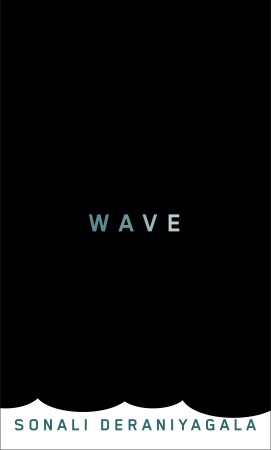
What about being on vacation and having your entire family swept away in a wave and somehow, although you have been swallowed by that same wave, you survive? That’s just too much, isn’t it? Wave by Sonali Deraniyagala is that terrible true story. Breathtaking in tragedy, and in beauty. It seems impossible. Yet Deraniyagala, who lost her husband, two young sons and her parents in the tidal wave that hit Sri Lanka in 2004,  has created something beautiful out of that terrifying story.

Beyond the incredible scope of the facts of being hammered by a terrifying surge of ocean, her recollection, her rendering, is stunning. We are swept away with the author by the wave that continues to drown her in unspeakable, maddening grief. She holds the reader in the vice grip of her memories.

Deraniyagala did not want to live without her beautiful boys and her husband and only the vigilance of her family in Sri Lanka prevented her from ending her life. Finally, she does what, in the flash of the second we might dare to imagine: she carries on. Cheryl Strayed (author of the brilliant memoir, Wild ) gives details and a fine review of  Wave here in today’s Sunday New York Time’s Book Review.

Wave is deceptively slight, a tiny book with a simple black cover. Inside is a diamond exquisitely carved from the author’s rage, her heartbreak – but most of all, her fierce and beautiful love. A love that lives on, lucky for us, with her.

Love for A Tale For the Time Being by Ruth Ozeki

9780670026630_p0_v1_s600

The Brazilian guy who cleans the bookstore, speaks only a few words of English. I always say good morning and make small talk, but he’s not friendly and I think he’d rather I didn’t. He wears one of those blue-tooth phones that fit in your ear, vacuuming around customers browsing books or right next to where the morning staff meeting is being held, all the while bellowing in Portuguese to whoever is in his ear. I suspect he doesn’t mean to be annoying but that he is in a kind of oblivious state of other-ness. I remember when I lived in countries where I did not speak the language, how hard it can be. (although I think he might also just be a jerk)

I have lived in 3 different countries where initially, like the Brazilian man, I spoke barely a word of the language. Anyone who has been a tourist can get this stupid feeling, but when it’s your day-to-day life the loneliness, otherworldly feeling, is profound.

Life with UN Peacekeeping in Croatia and Bosnia was insular – my life and relationships existed mostly within the international community. My understanding of Croatian, Serbian, Bosnian (virtually same language but for different words for bread!) never grew much beyond the superficial greeting, shopping, weather chats with neighbors, sometimes against the backdrop of not-so-distant shelling and machine gun fire. My time in Italy was briefer but my isolation even more intense as I spent 3 weeks by my daughter’s hospital cot in Brindisi hospital when she was born prematurely. That was some zone to be in.

So I imagine I know something about how the Brazilian cleaner feels. I remember the apartness, the feeling of kind of living an incomplete experience. So many nuances around you are undecipherable.

A bewildered looking me with Watanabe-san and Suzuki-san in the early 1980s.

But it’s mostly my years in Japan I recall.  Although I studied Japanese in my feeble fashion, so many Japanese people wanted to speak English, it was easy to be lazy about learning their language. And even as I became fluently-flawed and gathered Japanese friends and boyfriends, I remained an outsider, oblivious to the reality and details of my Japanese neighbors – and they, to mine.

Still, for all the loneliness and discomfort, something still draws me to that expat existence, to that strange-state of being, the challenge to find a place. My focus, by necessity, turned inward, I filled journals with ramblings. My recollection of those sometimes uncomfortable times, was the richness of my interior life. A consciousness that, now in my familiar, task driven day-to-day existence, I strive for. A state of being alert in time.

Ruth Ozeki’s long awaited beautiful new novel, A Tale for the Time Being has really gotten under my skin and I think it’s not only because I love her writing (My Year of Meats is also a favorite) but because she captures this bubble existence – this weird sense of being, of being somewhere but not of it. We all are in that place at some point but some, by dint of the harshness of society, the struggle to exist in a world you do not feel part of, is often not by choice.  Striving for … place? peace? love? Sometimes, giving up.

In A Tale for the Time Being Ozeki poetically takes us along on her quest to discover more about Nao, the Japanese teenage author of the journal she picks up out of the flotsam of a Pacific Northwest beach.  I fell in love with Nao and Jiko, her ancient grandmother who lives as a Buddhist nun in Sendai right at tsunami ‘ground-zero’.

While reading this, I returned home from work each day to immediately pick up from where I’d left off, retrieving my book from beside the bed, where fighting sleep to read, I’d dropped it the night before. Perhaps because Ruth of the novel is Ruth the author, I felt sure such a diary really exists, and worried right along with Ruth (s), that Nao had been swept away in the tsunami… I’ll let you find out.

What have you read lately that you loved? This question is often asked of me in the bookstore. I’m usually reading at least two books so you’d think I’d always have an answer. But I often can’t even quite remember or at least, I can’t say I LOVE whatever I am reading. But I LOVE Ruth Ozeki’s new novel A Tale for the Time Being. What a beauty. I finished it a few days ago and the magic of it still lingers with me. Read it!

What a Difference a Day Makes…

March 8
March 8

Yesterday morning I shuffled out of the house to walk Tetley, simultaneously grouchy about and awestruck by the beauty of the snow that had fallen overnight. My neighborhood looked like a black-and-white movie

Twenty-four little hours later, I pulled into the driveway after work and caught a glimpse of color in the corner of the garden. I stepped across the now soggy brown lawn and found these. A promise of spring.

March 9
March 9

That’s March, isn’t it?  A crazy month of winds, rains, dramatic light changes, time changes.  The calendar tells us it’s Spring even as we still shiver and our breath lingers like a cloud in the frosty air. Still, we made it through winter – the proof is in the brave croci. We are in for wonderful changes – right? Notice, I hesitate. That’s the way I’ve been recently.

Lately, my old enemy – anxiety – has been lurking around ready to pounce on me at anytime, grabbing my throat and giving me a gut punch. My daughter is a senior in high school and we are waiting for college decisions, financial aid offers. Where will she be accepted? What will I be able to afford? You get the picture.

The uncertainty of major changes, so much being up in the air like this, makes me hold my breath, my chest gets tight. Like any parent, I want my daughter’s life to be perfect – for her to get what she wants – or at the very least, what she needs. And in this case, there is very little I can do to control that. So I have become a worrying, anxious mess. I hate myself like this and my daughter, the picture of calm and acceptance, thinks I’m crazy.

These 24 hours in nature (as always, my favorite teacher) reminds me how fast things can change and how most of the time, there’s not a damn thing you can do about any of it. Depending on how you look at it, this fact can be a comfort or, if you are me, a terror. That’s the key: it’s how you look at it. Any of us who have lived on the planet for any time certainly have experienced both the joys and sorrows of change and how fast things can happen.

Within 24 hours you may meet – or lose – the love of your life, win the lottery – (I’m waiting…) or lose your fortune, be diagnosed with cancer or given the all-clear. Shit happens and much of it is beyond our control. Better to not get in a tizzy, right? Better to wait and see what life will bring and meanwhile, try to live in the present. Seize the joy of  a blossom or just relax and delight in the peace of a snowy morning  as sick as I may be, of winter. Breathing is so much easier without the vice-grip of anxiety around my throat. And besides, this morning, it smells like spring.

“What Saves Us All Is Love”

doc50d7a1a0e3688859517178

Shadowed by the deaths of little children and their teachers, the holiday season in Connecticut passed heavy with sadness. Thoughts of grieving neighbors tempered every day. As I moved through my days at the bookstore, acknowledgement was shared in the minutes spent with strangers while finding or bagging their books. These usually frantic exchanges before Christmas, slowed slightly by a connection of shared sorrow. The season, while bleak, had a poignancy. Customers were kinder. As if feeling the rawness and wonder: how do we go on after these unbearable losses?

Healing seems impossible. How will those parents ever again smile, feel any joy? Yet look: here is the face of the mother that last Christmas of 2011, who woke to a house in flames that killed her three beautiful girls and her parents. In these photos she looks beautiful, smiling, surrounded by her friends who all draw close to her, loving her. Yes, there she is, a year later, living life. In pain, of course — but surely glimpsing a light. For these past 365 days she has carried on with that unbearable weight of her horrible loss — as others have before her. How has she done this? How will the others?

Love, Madonna Badger, the grieving Stamford mother says, saves us all. When we are in the dark night of grief, it seems that light might be smothered, but somehow – lit it stays. This remarkable essence, this life, makes us extraordinary. Inevitably, we all will experience deaths of our loved ones. While quietly we are grateful that this time, this terrible story is not ours, that it is not our beloved, we glimpse the truth that it might have been. And so, a very little bit at least — it is. Helpless to make anything better, we still want to take action, to comfort. Even knowing there are no words, we reach out to our friends and strangers alike, sending messages – because in this world of grieving, no one is really a complete stranger, not for long.

Out of this longing to do something we shower the Newtown community, with toys for their children. Chances are, those families did not need more under their trees but the rest of us needed to do something. To show our love. We drive through blizzards to gather around parents mourning the death of their child. No words can comfort, but we can fill a room, our faces glowing with tears, we can acknowledge and share the one thing that we hope may keep our friends, our fellow humans going forward: love. It is what saves us all.

Eggplant Rescue and a Re-discovered Cookbook

Cookbook Shelf

We’re a little sick of eggplant around here. We joined a different CSA this year because the previous one (that I loved – every week a new culinary adventure of heirlooms and weird vegetables)  no longer drops at a convenient pickup location. This new farm, while perfectly fine with very generous shares,  has a rather blah selection and too much repetition. Green cabbage again and again, cucumbers, cucumbers and more cucumbers. (I think we’re done with them… no photos to show.) Yummy – but just same ol’ tomatoes and collard greens gigantic enough to cover a roof with. And eggplant. Week after week – at least one, and usually more, eggplants. And that’s even after splitting the share with my friend. (Do I sound like a brat, complaining about this bounty?)

Farm Tomatoes, My Peppers

Of course there is eggplant parm, baba ganoush, stir fried, thin slices salted and made into ‘chips’. I’ve made them all for what has become, an ambivalent audience. And in the next week’s load of vegetables – more eggplant!  This weekend I remembered a recipe I’d made years ago out of  Festa del Giardino: A Harvest of Recipes and Family Memories.  While this not the kind of cookbook I’m usually a sucker for — no beautiful photos — it has concise, easy to follow recipes that result in obviously memorable dishes. Like this Caponata I whipped up yesterday.

Caponata

I remember Molly being younger than 10 and a kid who hated veggies, digging in. I’m afraid you might be hard-pressed to find this book now out-of-print, by local author and lovely Sally Maraventano who came to the store for a book signing in 1999.  (But she does have her own cooking school.)

Festa del Giardino

I’m delighted to have found this obviously well-used cookbook again and inspired to rediscover the great recipes in it and the rest of this overflow stash that always escapes my periodic book-purges. Next, maybe I’ll bake bread…

Cookbook Cabinet
Follow

Get every new post on this blog delivered to your Inbox.

Join other followers: